
Motherland
As a child,
I was immersed in the art of a mystical land I couldn’t reach for. The artwork hung from our walls, had a place at our dining tables, dreamt within our bedrooms, hoping to be seen, touched and witnessed.
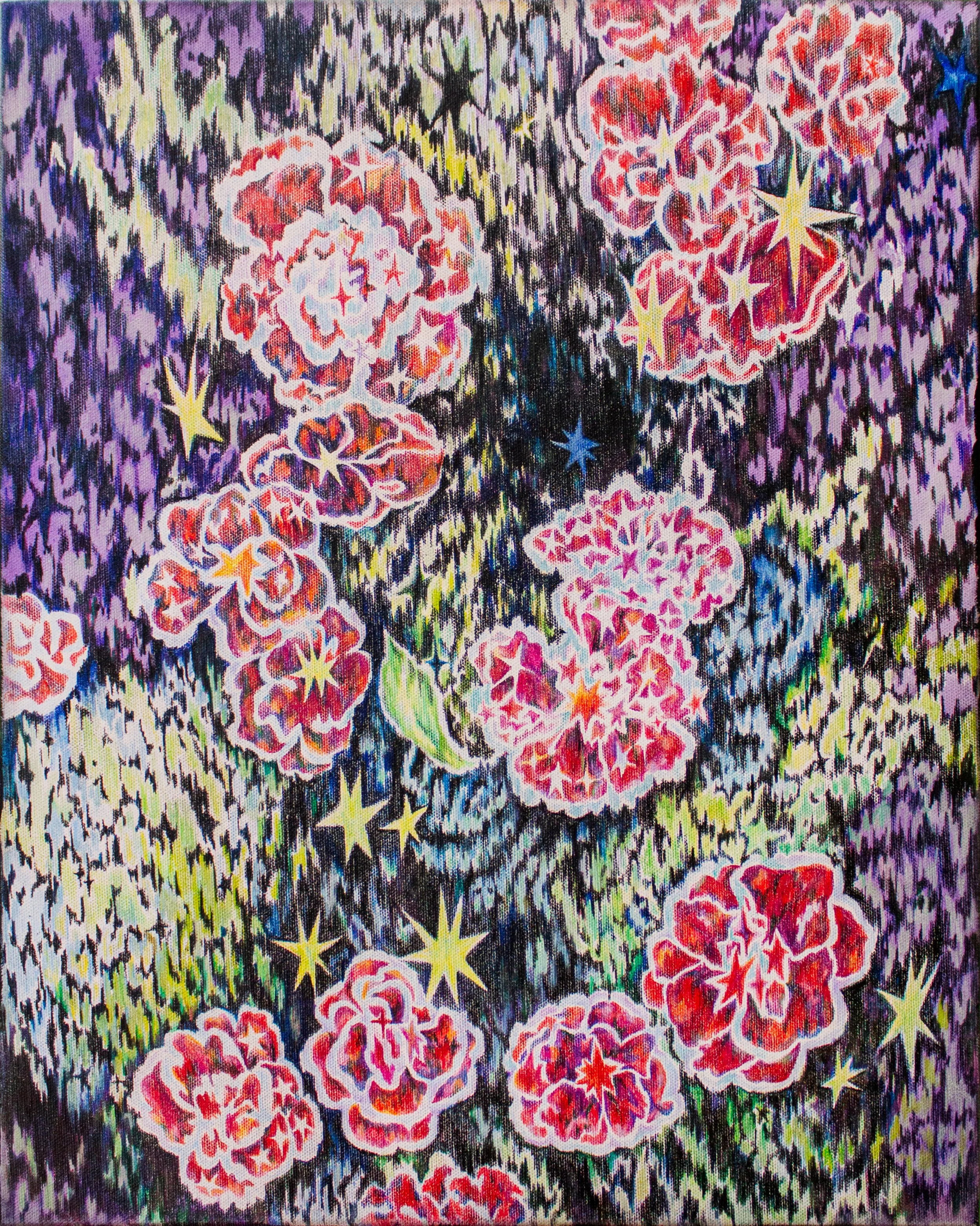
Aprareces tu (You appear), 2026
Color pencil on canvas
I told myself this land was a home I was ripped away from.
I was a princess of great inheritance,
in a futuristic exile.
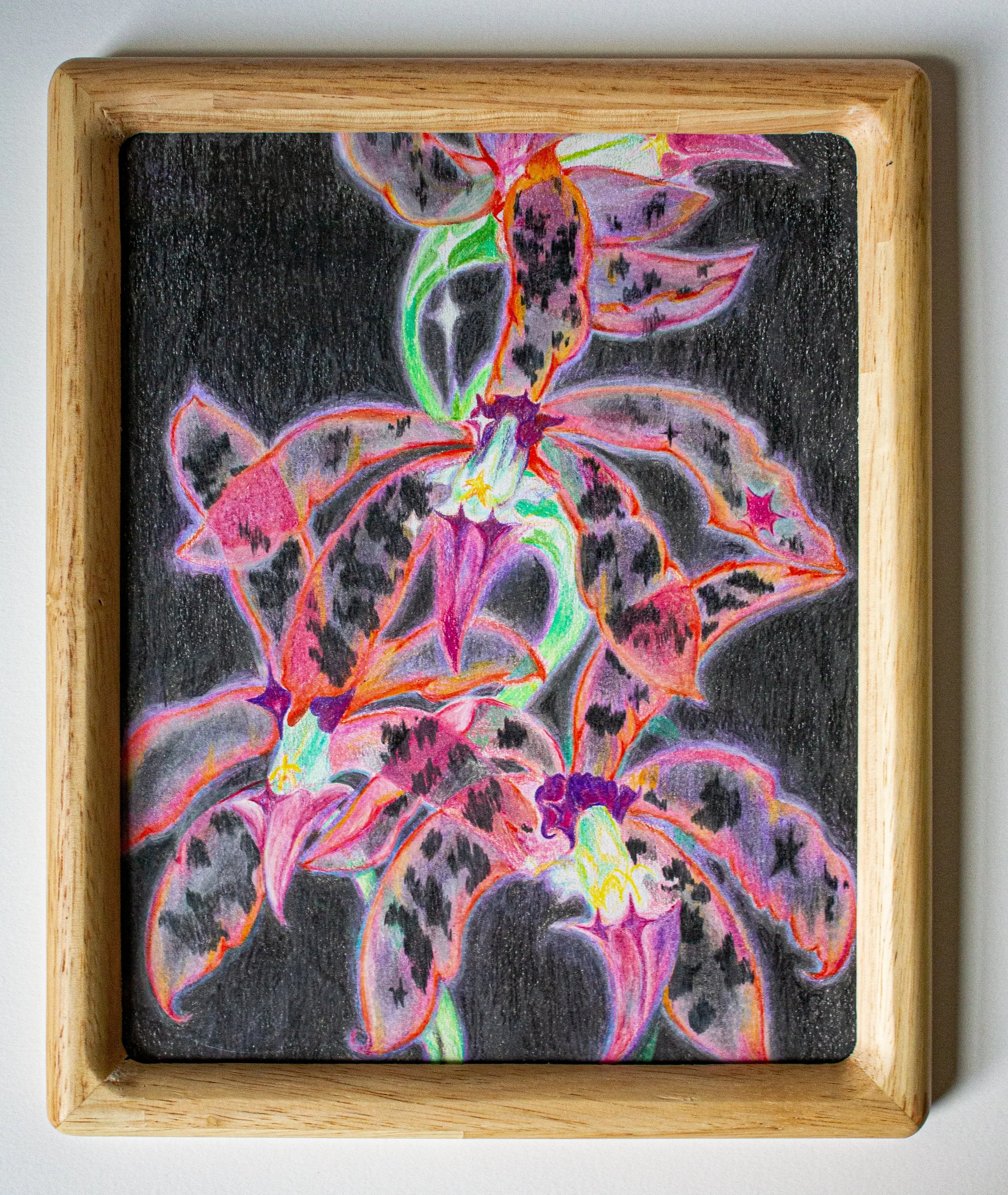
Orchidia, 2026
Color pencil on paper
Rows and rows of stars grew from the soil, setting shadows aglow.
There were undying fields of cotton candy spun gold. The gold was exploited in creative ways.
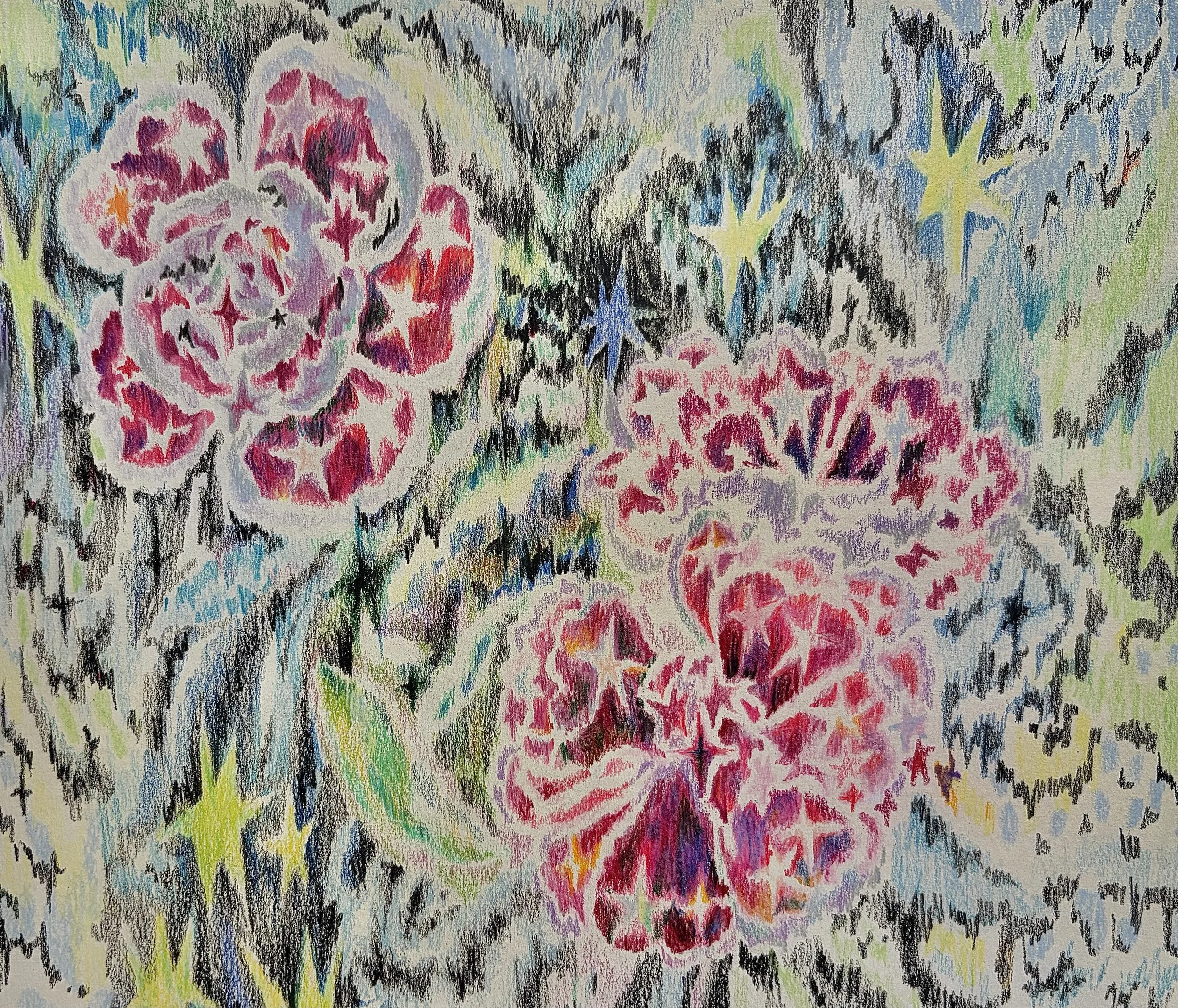
The flowers are a highway, 2026
Color pencil on paper
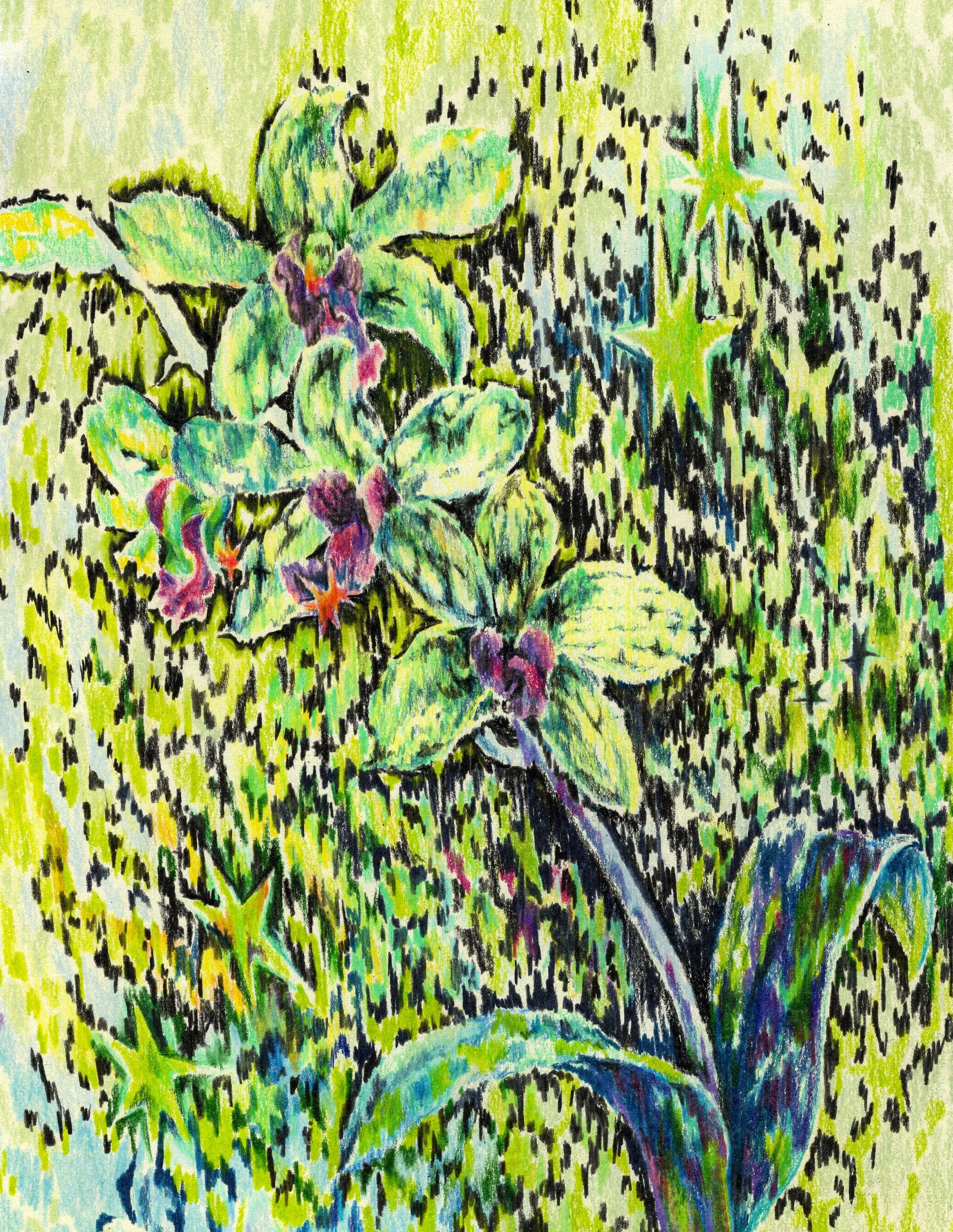
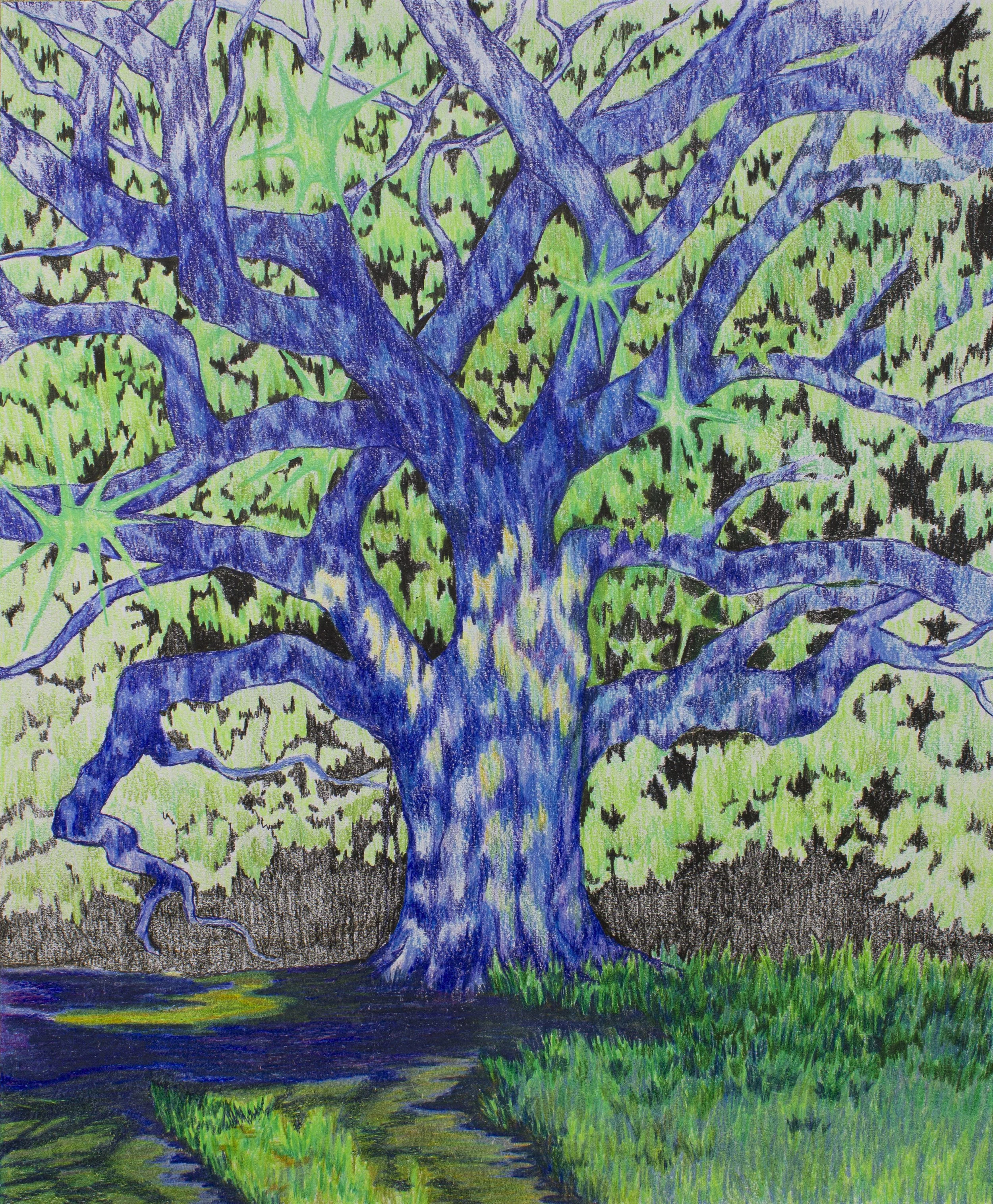
My favorite neighborhood tree, 2026
Color pencil on paper
Orchidia 2, 2026
Color pencil on paper
They called me Chawa and I was forged into a vessel,
comfortable in its dormancy,
left holding the world’s loneliness.
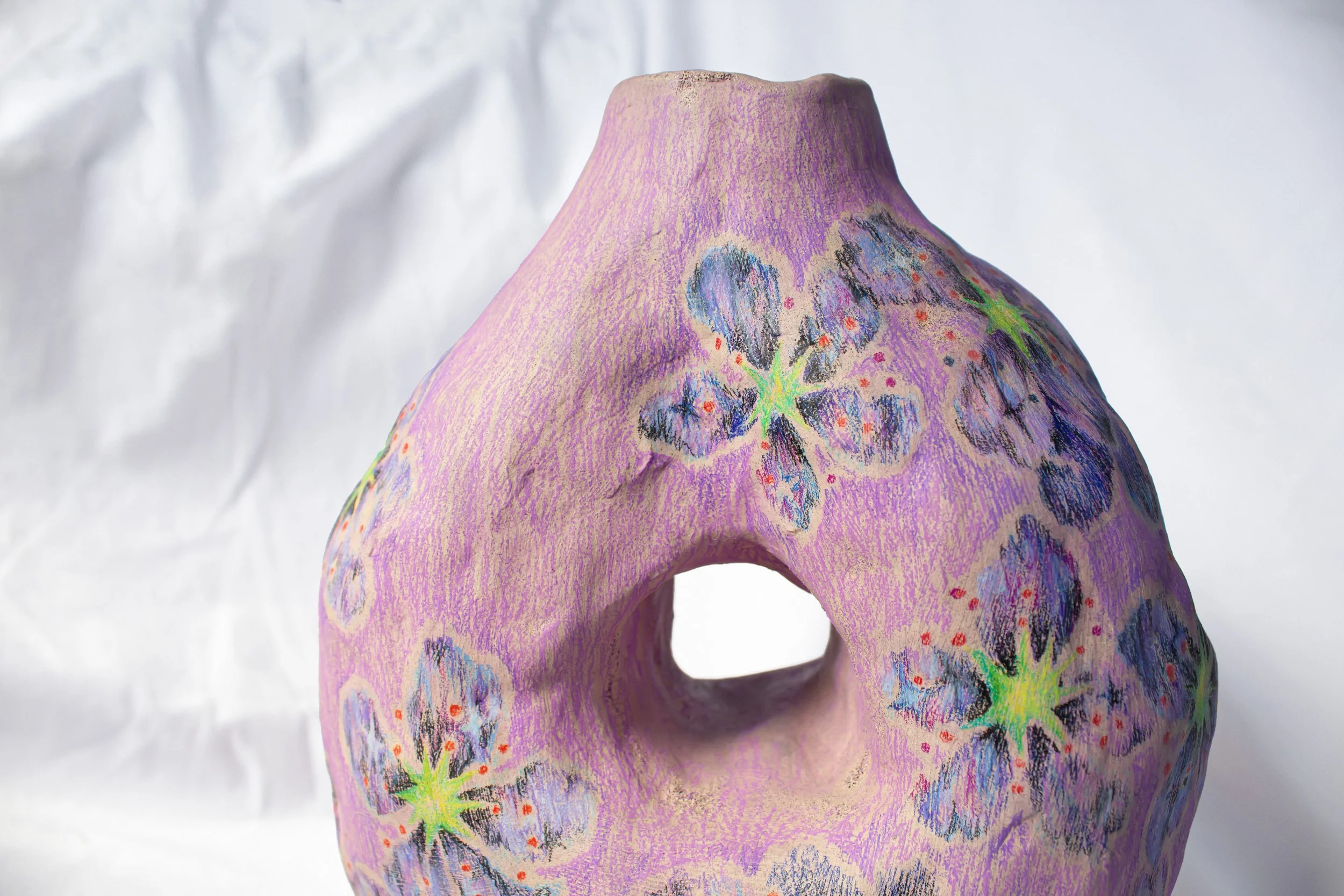
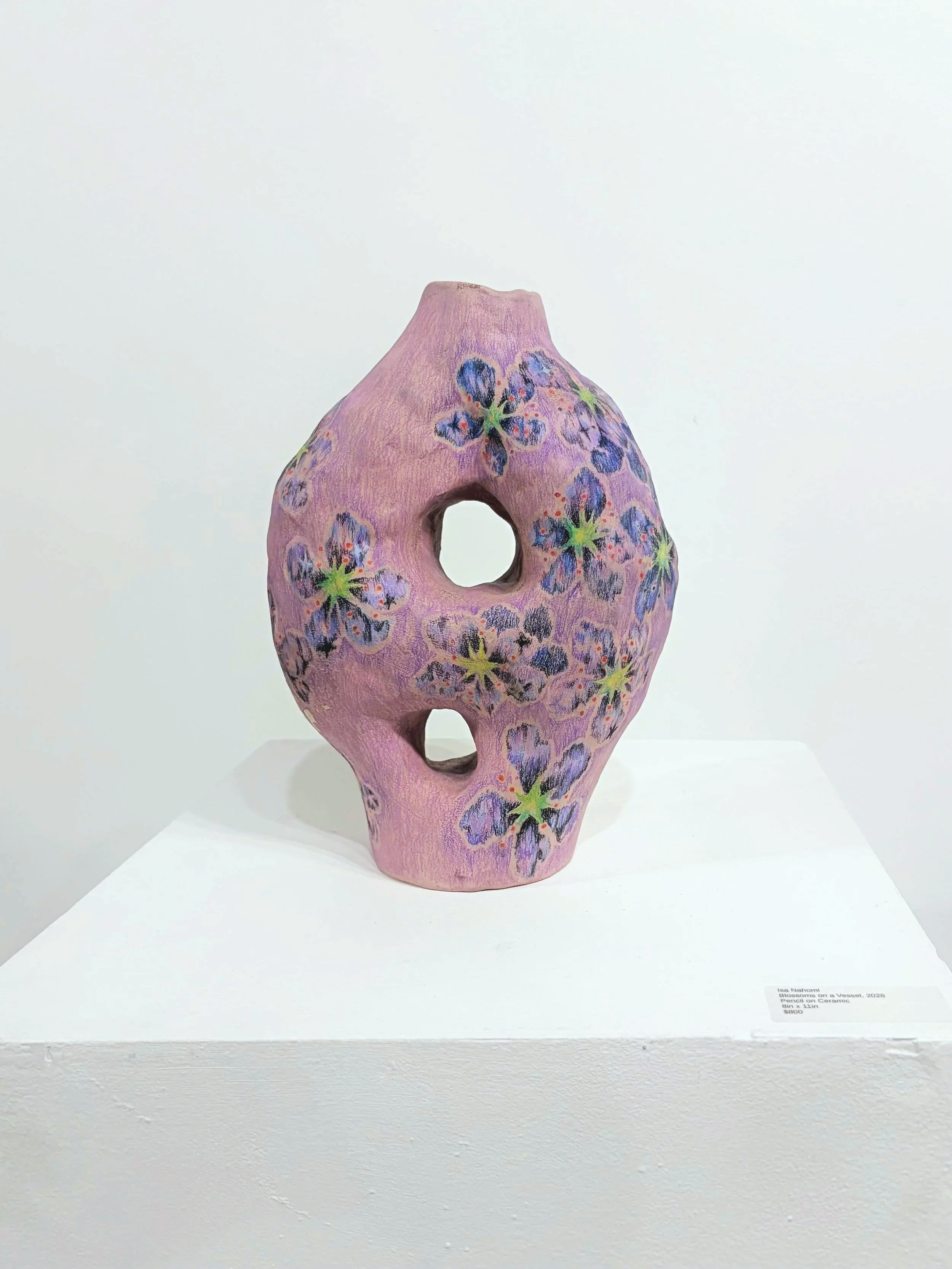
Blossoms on a Vessel, 2026
Color pencil on stoneware
-
Motherland as a visual language is an attempt to process the paradoxical complexity of the latinx experience. We don’t belong here, yet we are not welcome back from whence we came. We are too foreign for the Other but we are too queer for our past. When every breath is carved out of space that isn’t freely given, that is constantly contested, the world begins to quiver and refuge is found in wonder.
Through the lens of magic realism, I propose a way to reframe a very raw and real truth: there is no blending in or code switching that can hide our constellations. We live in a liminal space of color and struggle, of offensive contrasts, of nature turned strange. We reach for our mother but she reaches for us too and there is nothing we can do to soothe.
Every piece is meant to feel like camouflage that is denied its function. Instead of concealing, it exposes. In Blossoms on a Vessel, this concept can be seen clearly. The Vessel’s spots are freshly blossomed flowers with stars shining from within. What is meant to hide, instead announces itself boldly. The camouflage doesn’t fully resolve into safety or beauty, it stays unsettled, luminous in some places and perilous in others.
By chance, the series began to take shape through the use of colored pencils, across different surfaces. A material whose home has been contested in the category of fine art. Instead, colored pencil is commonly placed in the craft movement. Similarly, the art of my heritage is typically described as artisanal, something that sometimes strips away the importance of its process, and separates it from fine art, for better or for worse.
The concept of exile and separation echoes throughout the series. My greatest influence came from Amate paintings, an art form adopted by various peoples throughout Mexico such as the Otomi and Nahua. These paintings were originally made on pottery, and later painted onto amate paper, or tree bark. The use of amate carries its own history of suppression and erasure.
Amate paintings depict a utopian pueblo where every form, be it houses, people, animals or nature, holds the same sense of importance depicted through scale and color. They create a sense of harmony that I find paralleled in flowers and trees. Nature becomes a place of gathering and harmony within contrasts, where bold camouflage is welcomed rather than shunned.
Motherland invites the viewer to gather within contrast. To give up resolution, instead to hold complicated feelings and recognize them as constellations that demand space.